

Landfill Tax Has Risen Again – What Your Business Needs To Know For 2026/27
If your business sends waste to landfill, then it’s critical that you’re aware of the latest legislation surrounding landfill tax.
The cost of sending waste to landfill has increased again. From 1 April 2026, the standard rate of Landfill Tax increased to £130.75 per tonne. At the same time, the lower rate (applying to specific materials) more than doubled, from £4.05 to £8.65 per tonne.
The increase to the lower rate is particularly significant for any business that produces high volumes of inert waste, e.g. soil, concrete and rubble.
Although Landfill Tax is technically paid to HMRC by landfill site operators, this extra cost is generally passed on to businesses through waste disposal charges. So, when landfill costs increase, businesses usually feel this rise through higher waste management bills.
In this article, our expert team have outlined what the latest increase means for your business, and what you can do to avoid dramatically higher landfill costs.
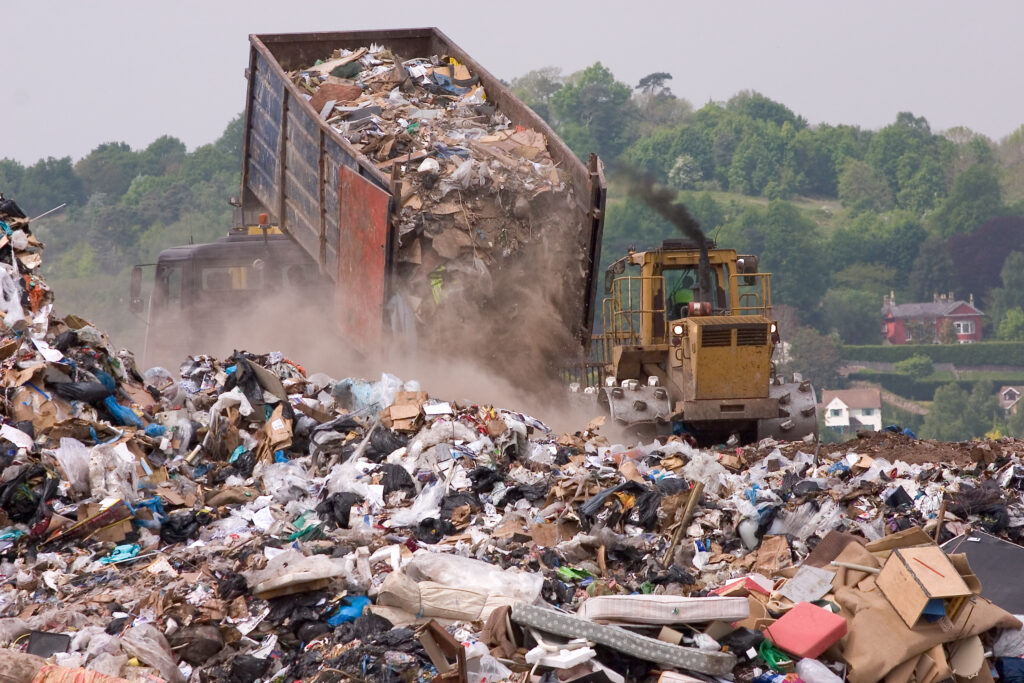
What is Landfill Tax?
Landfill Tax was introduced in 1996 by the government. It was designed to encourage businesses and waste producers to reduce the amount of waste they send to landfill, and opt for recycling and recovery practices where possible.
There are two rates of Landfill Tax.
- The standard rate applies to most taxable waste. This has now risen to £130.75 per tonne.
- The lower rate applies to certain qualifying materials (including some types of inert or less polluting waste). This has now risen to £8.65 per tonne.
Although the lower rate is still far less than the standard rate, it represents the highest proportional increase. So, it’s vital that businesses consider this spike in costs (especially for businesses regularly handling high volumes of this waste type).
Why has the Landfill Tax increased?
As with its first introduction, this year’s increase has been introduced by the government to encourage businesses to further reduce how much waste they send to landfill.
At Budget 2025, the government confirmed that it would not move forward with plans to move to a single rate of Landfill Tax by 2030.
However, this is not to say that landfill disposal is becoming cheaper.
Both rates are consistently increasing – the standard rate is rising in line with RPI, and the lower rate is increasing by the same cash amount.
So, it’s clear that sending waste to landfill will continue to become increasingly expensive, while more sustainable routes like recycling and reuse are becoming far more cost-effective.
How does this impact your business?
If your business sends mixed waste to landfill, then the latest increase could have a significant impact on your disposal costs – Especially if recyclable materials or inert waste is being mixed with general waste.
For example, if recyclable materials are placed into a general waste stream, then they will most likely be sent to landfill. If so, they’ll be subject to the (much higher) standard rate of Landfill Tax.
By separating those materials when your waste is produced, you can ensure they are diverted into more suitable and lower-cost recycling routes.
However, with the increase to the lower rate too, businesses that are producing high volumes of construction and inert waste need to consider how they are producing and managing their waste more carefully.
The importance of the Simpler Recycling reforms
In addition to the Landfill Tax rises, the government’s Simpler Recycling reforms make it even more important for businesses to review their waste management practices.
The Simpler Recycling reforms were introduced on 31 March 2025, affecting workplaces in England with 10 or more employees. These businesses now have to arrange separate collections for specified recyclable materials (plus additional requirements for other waste types).
These new requirements all clearly emphasise that improving waste segregation can benefit your business, by both improving your environmental impact and reducing your waste costs.
The bottom line is: For businesses that don’t segregate waste properly, they are paying full Landfill Tax on materials that could be recycled for far less, or even for free.
How can you reduce your Landfill Tax costs?
By arranging a detailed waste audit, you can identify exactly what your business is throwing away.
Then, by working with a trusted waste management specialist, you can determine whether any of your waste could be successfully diverted from landfill.
For example, this could include:
- Separating recyclable materials (from general waste)
- Arranging dedicated food waste collections
- Diverting WEEE and electrical equipment through suitable recycling systems
- Separating inert and construction waste
- Confirming whether your waste streams are being correctly classified
- Finding ways to reuse materials (before they are disposed of as waste).
With small changes like these, when they are amplified across your business, they can make a significant difference to your overall costs.
At EnviroCraft, we provide landfill diversion and recycling services to businesses throughout the UK.
Our expert team can help you optimise your waste management, from identifying opportunities to divert waste from landfill, to arranging and implementing suitable recycling and recovery solutions.
So if you’re concerned about how the latest Landfill Tax increase will impact your business, our team are on hand to help.